

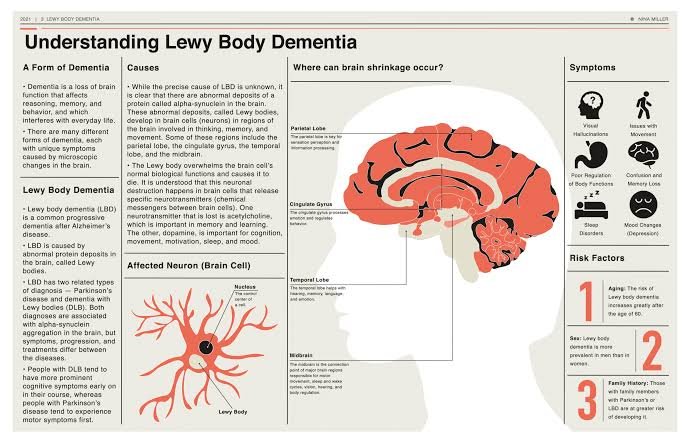
The public passing of beloved actor Sir Patrick Stewart at age 86, following a brief journey with Alzheimer’s disease and Lewy body dementia (LBD), has placed a national spotlight on one of the most complex, yet frequently misunderstood, forms of neurodegeneration: Mixed Dementia.
While many people think of dementia as a single disease, it is an umbrella term. In reality, many individuals live with overlapping brain pathologies—most commonly the combination of amyloid-beta plaques and tau tangles (Alzheimer’s disease) alongside alpha-synuclein protein deposits (Lewy bodies).
In this comprehensive medical explainer, we break down what mixed dementia is, how Alzheimer’s and Lewy body dementia interact, key warning signs, diagnostic challenges, and modern management strategies.
🧬 What Is Mixed Dementia?
Mixed dementia occurs when brain changes characteristic of more than one cause of dementia occur simultaneously.
While mixed dementia can involve vascular brain changes or frontotemporal lobar degeneration, the co-occurrence of Alzheimer’s Disease (AD) and Dementia with Lewy Bodies (DLB) is extremely common in late-stage autopsies.
| Condition | Primary Biological Pathology | Early Core Symptoms |
| Alzheimer’s Disease | Amyloid-beta plaques & hyperphosphorylated tau protein tangles | Short-term memory impairment, word-finding difficulty, disorientation |
| Lewy Body Dementia | Aggregates of $\alpha$-synuclein protein (“Lewy bodies”) | Visual hallucinations, fluctuating alertness, REM sleep disorder, motor stiffness |
| Mixed AD + LBD | Dual buildup of plaque/tangles AND Lewy body deposits | Accelerated cognitive decline, complex blend of memory loss, visual hallucinations, and motor symptoms |
⚡ Key Signs & Symptoms of Co-Occurring AD + LBD
When Alzheimer’s and Lewy body dementia overlap, the symptom profile can fluctuate unpredictably from day to day.
1. Cognitive & Memory Impairment
- Memory Loss: Difficulty recalling recent conversations or learning new information (classic Alzheimer’s hallmark).
- Fluctuating Cognition: Spontaneous, dramatic shifts in concentration, attention, and alertness. A person may appear fully clear one hour and deeply lethargic or confused the next.
- Visuospatial Deficits: Trouble judging distances, depth perception, or visual orientation.
2. Behavioral & Neurological Features
- Detailed Visual Hallucinations: Seeing people, children, or animals that aren’t there. In LBD, these are typically vivid, well-formed, and appear early.
- REM Sleep Behavior Disorder (RBD): Physically acting out dreams during sleep (thrashing, shouting, punching) due to a loss of normal muscle paralysis during REM sleep. This often presents years before formal cognitive symptoms emerge.
- Parkinsonian Motor Symptoms: Muscle rigidity, shuffling gait, stooped posture, slowness of movement (bradykinesia), and tremors.
3. Autonomic System Dysfunction
- Sudden drops in blood pressure upon standing (orthostatic hypotension), chronic constipation, temperature regulation difficulties, and fainting spells.
🔍 Why Diagnosing Mixed Dementia Is So Challenging
Mixed dementia is notoriously difficult to diagnose early because one pathology can easily mask or mimic another.
- Misdiagnosis as pure Alzheimer’s: Clinicians may attribute memory loss strictly to Alzheimer’s, missing subtle early signs of Lewy body involvement such as REM sleep disorder or visual spatial changes.
- Medication Sensitivity Warning: Diagnosing LBD early is critical because up to 50% of individuals with Lewy body dementia experience extreme sensitivity to traditional neuroleptic/antipsychotic medications. Administering certain antipsychotics can cause severe parkinsonism, irreversible cognitive decline, or life-threatening reactions like Neuroleptic Malignant Syndrome.
Diagnostic Tools Used Today
- Comprehensive Neuropsychological Testing: Differentiates episodic memory retention vs. executive function and attention fluctuations.
- DaTscan (Ioflupane I-123 SPECT Imaging): Evaluates dopamine transporter levels in the brain to detect parkinsonian loss characteristic of Lewy body pathology.
- Brain MRI & PET Scans: PET imaging can detect amyloid plaque deposition (AD) or altered glucose metabolism patterns in specific cortical regions.
- Polysomnography (Sleep Study): Confirms REM Sleep Behavior Disorder.
💊 Treatment & Management Strategies
While there is currently no cure for Alzheimer’s or Lewy body dementia, targeted symptom management significantly improves quality of life for both patients and care partners.
                     +-----------------------------------+
                     |      Mixed Dementia Management    |
                     +-----------------------------------+
                                       |
       +-------------------------------+-------------------------------+
       |                               |                               |
       v                               v                               v
+--------------+               +---------------+               +---------------+
| Pharmacological|               | Non-Pharm    |               | Caregiver     |
| Interventions|               | Environment  |               | Support       |
+--------------+               +---------------+               +---------------+
• Cholinesterase               • Fall prevention               • Respite care
  inhibitors                   • Simple routines               • Support groups
• Memantine                    • Music/Pet therapy             • Future care
• Low-dose levodopa            • Calming sleep                  planning
  (monitored)                    rituals
1. Medication Options
- Cholinesterase Inhibitors (Donepezil, Rivastigmine, Galantamine): Often the first line of defense. They boost acetylcholine levels, helping improve both memory (AD) and alertness/hallucinations (LBD).
- Memantine: Helps regulate glutamate activity to protect brain cells in moderate-to-severe stages.
- Levodopa: Used cautiously in small doses to manage significant parkinsonian movement stiffness, though it must be monitored closely to avoid triggering worsening hallucinations.
2. Environmental & Non-Pharmacological Interventions
- Modify the Environment: Reduce clutter, install night lights, remove trip hazards, and minimize excess noise to decrease anxiety and confusion.
- Establish Calm Routines: Consistent daily schedules for meals, light exercise, and bedtime rituals help manage evening agitation (“sundowning”).
- Validation Therapy: Rather than arguing or correcting visual hallucinations that are not distressing, offer gentle reassurance and redirection.
🕊️ Supporting Care Partners and Families
Caring for a loved one with mixed dementia presents unique emotional and physical demands due to the combination of cognitive loss, behavioral shifts, and mobility changes.
- Build a Specialized Care Team: Engage neurologists, occupational therapists, physical therapists, and social workers early.
- Legal and Care Planning: Establish power of attorney, advance care directives, and financial plans as early as possible.
- Utilize Respite & Community Support: Organizations such as the Lewy Body Dementia Association (LBDA) and the Alzheimer’s Association offer local support groups, educational resources, and caregiver respite programs.
Final Thoughts
High-profile stories like Sir Patrick Stewart’s remind us how vital early detection and specialized neuro-palliative care are. If you or a loved one are noticing changes in memory, unexplained sleep disruptions, or visual hallucinations, consult a neurologist or memory clinic for a comprehensive evaluation.